
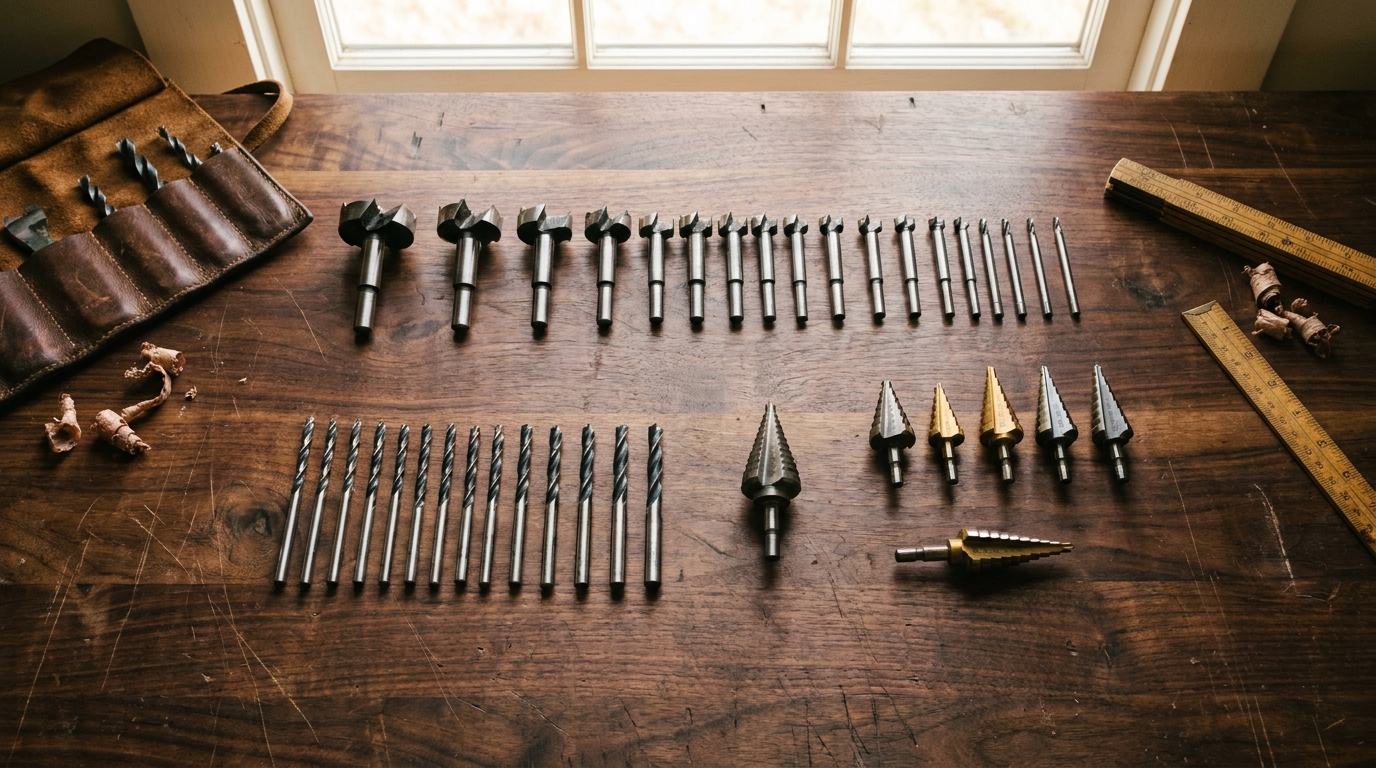
Holes in woodworking are rarely just holes; they are often the mating surfaces for joinery, hardware recesses, or alignment pins. Using the wrong drill bit geometry can result in misaligned joints, split wood, or ugly tearout. Let’s look at the primary bits every furniture maker needs.
Brad-Point Bits: Precision in Straight Grain
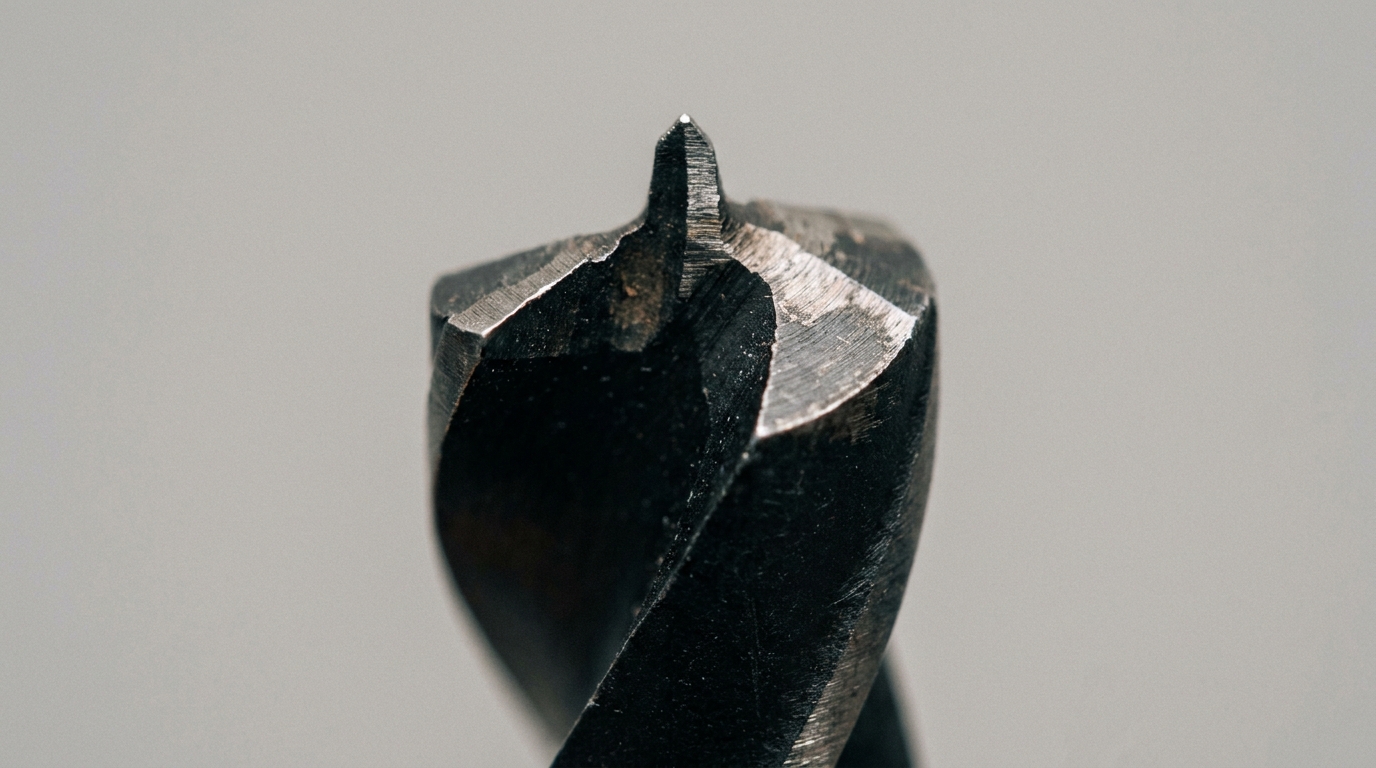
Standard twist drills are designed for metal and tend to wander when they hit hard wood fibers. A brad-point bit features a sharp center point (the brad) and two outer spurs. The center point prevents the bit from skating, while the spurs score the wood fibers around the circumference before the waste is scooped out. This results in incredibly clean entry holes.
Forstner Bits: Flat Bottoms and Clean Shoulders
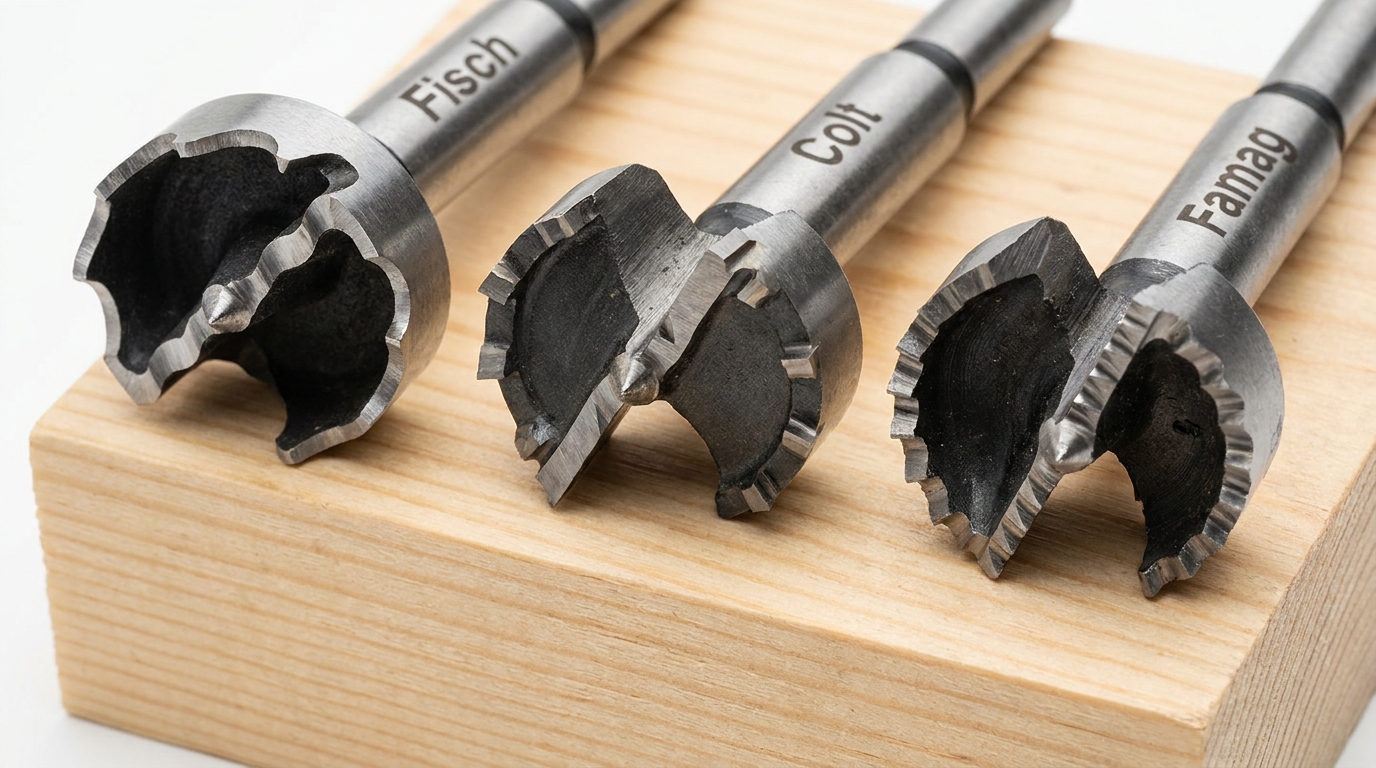
When you need to drill a large diameter hole, drill at an angle, or cut overlapping mortises, the Forstner bit is indispensable. Guided by its outer rim rather than a center point, a Forstner bit cuts exceptionally flat-bottomed holes, which are required for seating European-style cup hinges or hiding bolt heads.
Spade Bits and Step Bits: Speed vs Precision
Spade bits are excellent for rough construction carpentry, but they create terrible exit-hole tearout and should be kept away from furniture work. Step bits, on the other hand, are useful in the cabinet shop for drilling clean sheet-metal holes in electrical panels or drilling step-recesses for hardware installation.
Avoiding Tearout on Exit
To avoid tearout when drilling completely through a board, always clamp a scrap piece of wood (a backup board) to the back of your workpiece. The backup board supports the fibers as the drill spurs exit, ensuring a clean hole on both sides.
Video Guide: Every Woodworking Drill Bit Explained
For a detailed breakdown of premium Forstner brands, check out our Forstner Bit Shootout. To learn how to tune your brad-points for optimal performance, read our guide on Brad-Point Geometry and Tuning.
For standard dimensions and boring tolerances, refer to the ANSI Drill Bit Standard Specifications.
Have questions or feedback about this guide? Get in touch with our editorial team on our Contact Us page.