
Walking into a tool shop or browsing vintage markets can make buying a hand plane intimidating. With numbers from No. 1 to No. 8, block planes, and shoulder planes, where do you start? Today, I break down the absolute essentials you need to buy first.
The No. 5 Jack Plane: The First Bench Tool
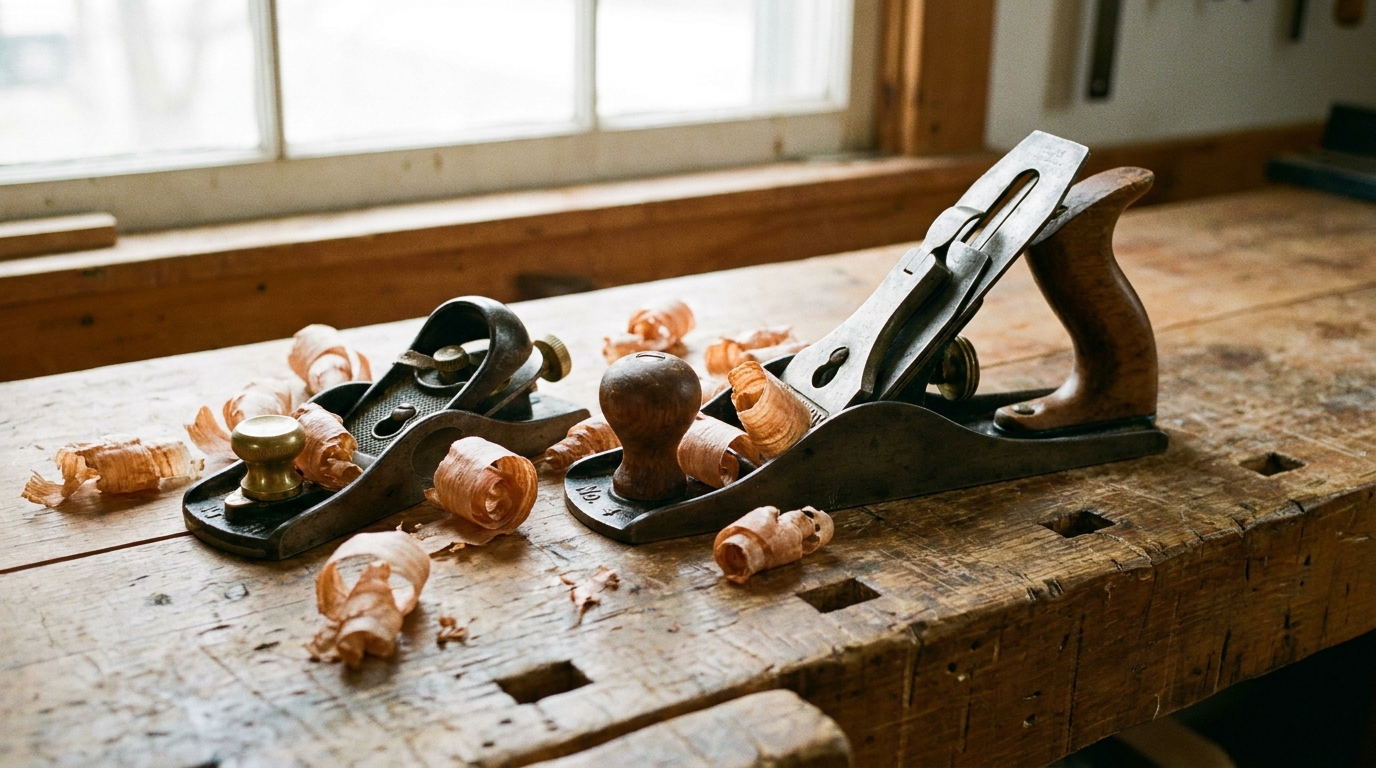
If you can only buy one plane, make it a No. 5 Jack Plane (approx. 14 inches long). It is long enough to flatten short boards, yet light enough to quickly remove bulk material or shoot edges. Equipped with a slightly curved blade (a cambered iron), it is the workhorse of the shop.
The Low-Angle Block Plane: Detailed Work and End Grain
A block plane fits in your hand and is designed for trimming end grain, breaking sharp corners, and fitting drawers. The low-angle version (blade bedded at 12 degrees, bevel-up) shears dense fibers easily, making it essential for detail work at the bench.
The No. 4 Smoothing Plane: Final Surface Prep
A smoothing plane (approx. 9 inches long) is designed to take the thinnest tissue-like shavings, leaving a surface that is smoother than any sandpaper can achieve. It is the final hand tool to touch the wood before finishing.
| Plane Type | Primary Task | Priority |
|---|---|---|
| No. 5 Jack Plane | Dimensioning, edge jointing | Must-Have #1 |
| Low-Angle Block Plane | End grain, breaking corners | Must-Have #2 |
| No. 4 Smoother | Surface smoothing, pre-finish | Highly Recommended #3 |
Video Guide: Hand Planes – What to Buy First
For details on how we test hand tools, see How We Test and Review Woodworking Tools at M3Tools. To learn about joinery fitting, read The Mortise and Tenon: Fitting the Joint by Hand.
To buy premium Lie-Nielsen hand planes, visit the official site at Lie-Nielsen Toolworks.
Have questions or feedback about this guide? Get in touch with our editorial team on our Contact Us page.