
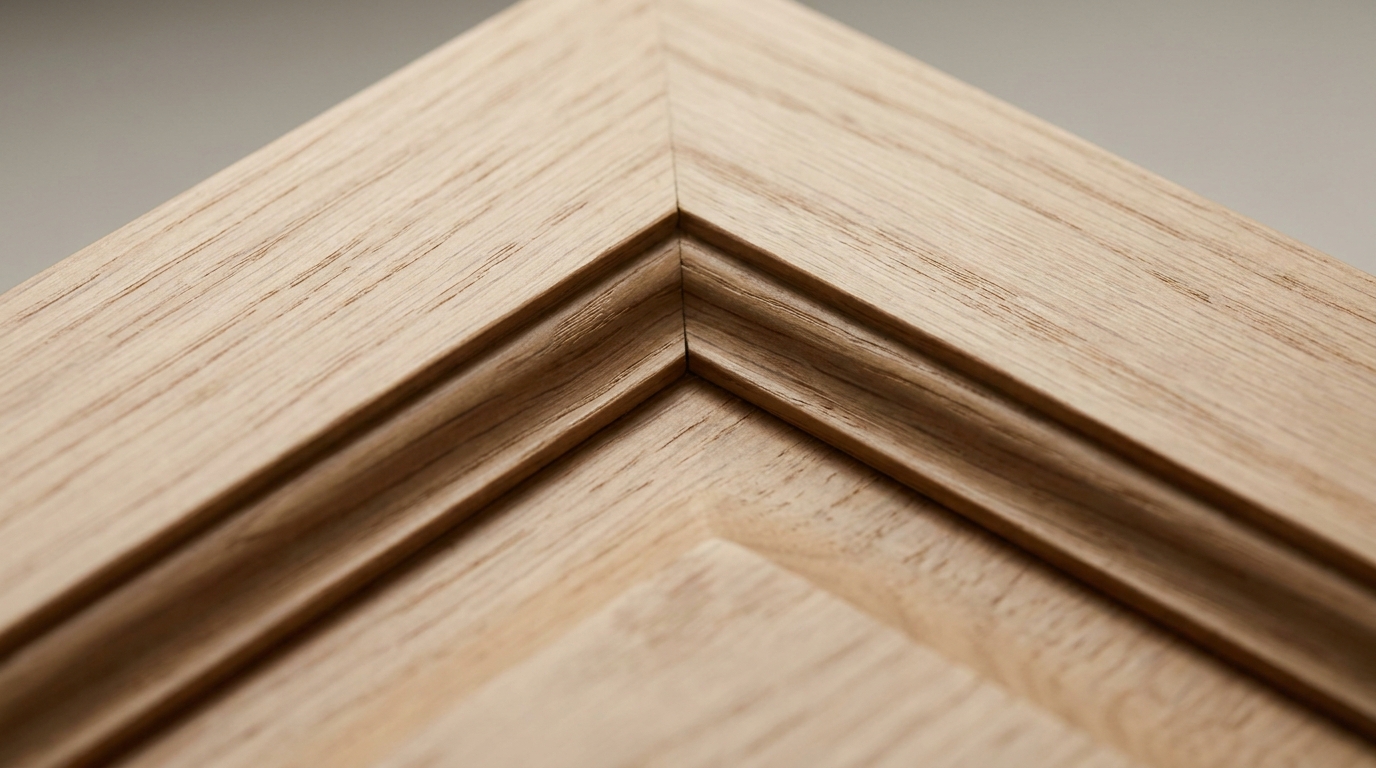
A piece of furniture’s edge profile is its signature. It defines how light hits the corners and places the piece within historical design movements. Selecting the wrong profile can disrupt the visual harmony of a cabinet. Let’s compare three classic American furniture styles and the profiles that define them.
Shaker Style: Restraint and Simplicity
Shaker furniture is characterized by utility, proportion, and lack of ornamentation. Edge treatments are minimal. Rather than complex curves, Shaker work relies on:
- Simple Chamfers: A clean 45-degree angle, usually cut with a chamfer router bit.
- Thumbmold Profiles: A subtle curve that mimics a thumbprint, creating soft shadows without drawing attention away from the wood grain.
- Square Edges: Sharp, slightly broken edges, achieved with simple sanding rather than profile bits.
Arts & Crafts (Mission): Bold, Structural lines
The Arts & Crafts movement emphasizes raw materials and straight, structural components. Rounded profiles are rare. The standard edge is square, with corners broken just enough to prevent splintering. If a profile is used, it is typically a long, shallow chamfer or a clean, straight bevel that matches the massive feel of quarter-sawn white oak.
Federal Style: Delicate Curves and Classical Moldings
Federal furniture is refined and elegant, drawing inspiration from classical Greek and Roman architecture. Profiles are light and complex, featuring:
- Ogee Profiles (Cyma Reversa): An S-shaped curve that transitions from concave to convex.
- Bead and Quirks: Small rounded profiles separated by narrow grooves, commonly used on table edges and drawer openings.
Video Guide: Furniture Profiles – Shaker & Federal Style
To choose the right router bit for these profiles, read Router Bits: A Working Woodworker’s Guide. For details on cutting clean shoulders for these styles, see Whiteside 1950 Router Bit Review.
For historical styling references and design templates, see Popular Woodworking Magazine.
Have questions or feedback about this guide? Get in touch with our editorial team on our Contact Us page.